


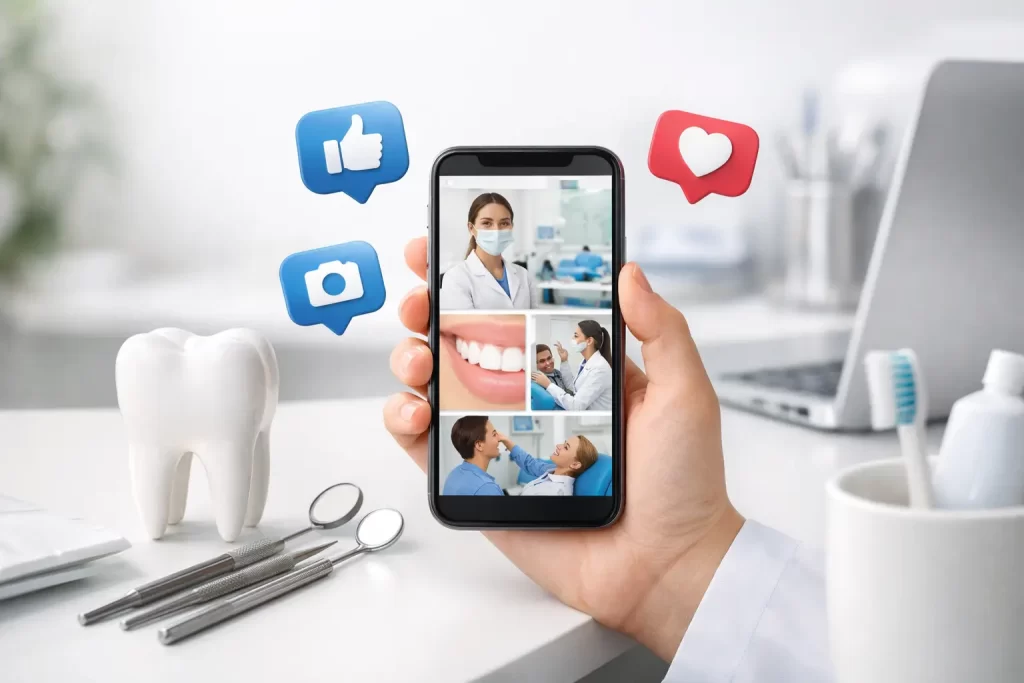
A prospective patient rarely chooses a dentist because a practice posted a polished stock image of a toothbrush. They choose the practice that feels credible, approachable, nearby, and capable of solving their problem. The best dental social media ideas make those decisions easier by showing real proof, real people, and clear next steps.
For dental practices, social media should not be treated as a box to check or a stream of random posts. It should support patient acquisition: reinforcing what people find in Google search, building familiarity before a first call, and giving current patients a reason to refer friends and family. The goal is not vanity metrics. The goal is more qualified appointment requests, stronger local recognition, and a brand patients remember when treatment becomes urgent.
Start With a Content Plan Built Around Patient Decisions
Before filming a single video, identify the treatments that drive revenue, the questions that slow down bookings, and the objections your front desk hears every week. A cosmetic practice may need to create confidence around veneers and Invisalign. A family dental office may need to reassure parents, explain insurance options, and make a first visit feel less intimidating.
A productive content mix usually has three jobs: establish trust, educate prospective patients, and prompt action. If every post asks people to book, the page feels like an advertisement. If every post is purely educational, it may generate attention without appointments. Balance creates better commercial results.
Your content should also match the platform. Short-form video is ideal for personality, treatment explanations, and quick answers. Facebook can support community updates, patient stories, and local engagement. Instagram is strong for visual proof and a consistent brand presence. A practice does not need to dominate every channel. It needs to show up consistently where its ideal patients spend time.
12 Best Dental Social Media Ideas for Local Growth
1. Show the People Behind the Practice
Patients want to know who will be treating them. Introduce dentists, hygienists, assistants, and front-desk staff with short, natural videos. Skip scripted corporate language. Ask each team member what they enjoy about patient care, what they wish nervous patients knew, or what part of dentistry they specialize in.
This type of content lowers anxiety before the first appointment and gives your practice a recognizable local identity. It also makes a multi-location or growing office feel more personal.
2. Create Consent-Based Before-and-After Stories
Before-and-after content remains one of the strongest social assets for cosmetic and restorative dentistry because it provides visible proof. The difference is in how it is handled. Secure written patient consent, use consistent lighting and angles, avoid exaggerated promises, and explain what treatment was performed.
A smile transformation post should focus on the patient outcome, not just the image. Was the patient preparing for a wedding? Did they regain confidence after years of hiding their smile? A brief story gives the result meaning and makes the treatment more relatable.
3. Answer One Real Patient Question Per Video
Your team already has a content calendar sitting at the front desk. Questions such as “Does a root canal hurt?” “How long do veneers last?” and “Can you fix a chipped tooth in one visit?” are exactly what potential patients search before contacting an office.
Record 30- to 60-second answers with a dentist or hygienist. Use plain language, offer general guidance, and invite viewers to schedule an evaluation for advice specific to their situation. This builds authority without pretending that social media can replace a clinical consultation.
4. Make First Visits Feel Familiar
Fear of the unknown stops people from booking. A simple walkthrough video can remove that barrier. Show where patients park, how they check in, what happens during an exam, and how your team handles questions about treatment plans or payment options.
This is especially valuable for family dentistry, pediatric dentistry, and offices targeting anxious patients. It is not flashy content, but it is highly practical. A worried patient may book because they can picture the experience before they arrive.
5. Highlight Technology Only When It Solves a Patient Problem
Intraoral scanners, digital X-rays, 3D imaging, same-day crowns, and laser dentistry can all be strong topics. But avoid posting equipment photos with no explanation. Patients do not book because a machine looks advanced. They book because they understand how it may improve comfort, speed, accuracy, or results.
For example, show how a digital scan can replace messy impressions, or explain how same-day crown technology may reduce the need for multiple appointments. Keep claims accurate and avoid presenting every case as identical.
6. Turn Reviews Into Trust-Building Content
A strong review is social proof from someone who has already made the decision a prospective patient is considering. With permission, turn a patient comment into a branded graphic, short video, or staff-read testimonial.
Do not overdesign it. The most persuasive part is specificity: a patient who was nervous, a parent whose child had a positive first visit, or someone who finally addressed a long-delayed dental issue. Pair the review with a clear call to schedule if viewers need similar care.
7. Post Local Community Moments
Dental practices compete locally, so local visibility matters. Share participation in school events, charity drives, community sponsorships, staff volunteer days, or neighborhood celebrations. These posts give people a reason to remember your practice outside a treatment need.
The trade-off is that community posts do not always produce immediate leads. Their value is cumulative. They build familiarity and reinforce that your practice is an active part of the area, not a faceless provider running generic ads.
8. Use Myth-versus-Fact Posts Carefully
Dental myths spread quickly, especially around whitening, braces, pain, and home remedies. Short myth-versus-fact videos let your practice correct misinformation while demonstrating expertise.
Choose topics patients genuinely ask about, such as whether whitening damages enamel or whether bleeding gums are normal. Keep the message calm and nonjudgmental. The purpose is to guide people toward professional care, not embarrass them for believing bad advice.
9. Explain Payment and Insurance in Plain English
Cost uncertainty is one of the largest booking barriers. While each patient’s coverage and treatment needs differ, social content can explain the process: how your team verifies benefits, available financing options, what an estimate includes, and when patients should ask questions.
Avoid quoting blanket prices unless they are accurate, current, and clearly qualified. Transparency earns trust, but misleading simplicity can create problems at the front desk. A well-made video about how your office handles financial conversations can generate more confidence than a discount graphic.
10. Celebrate Team Culture Without Making It the Whole Strategy
Birthday celebrations, training days, work anniversaries, and behind-the-scenes moments humanize a practice. They are useful because patients want a friendly environment, and prospective hires may also see your content.
Still, team culture content should support the patient experience. A post about staff training is stronger when it explains how the training helps patients receive better care. Keep the focus connected to the value your office provides.
11. Create Seasonal Prevention Campaigns
Seasonal content gives your practice timely reasons to communicate. Back-to-school checkups, year-end insurance benefit reminders, wedding-season smile consultations, sports mouthguards, and holiday emergency guidance are all relevant examples.
The best campaigns include an operational plan. If you promote year-end appointments, make sure the schedule has capacity, the front desk knows the offer details, and calls can be tracked. Promotion without a booking process wastes attention and can frustrate interested patients.
12. Run a Focused Video Series, Not Isolated Posts
A recurring series makes content easier to produce and easier for audiences to recognize. Examples include “Ask the Dentist,” “One-Minute Smile Tips,” “What to Expect,” or “Dental Care for Busy Families.” Use the same visual style and structure each week, while varying the topic.
Consistency matters more than chasing every trend. A practice that posts two useful, professionally produced videos each month and responds promptly to messages will generally outperform one that publishes daily for three weeks and then disappears.
Turn Attention Into Measurable Appointment Growth
Social media works best when it is connected to the rest of your marketing system. Every profile should have accurate location details, current contact information, recognizable branding, and a direct path to request an appointment. The website must load quickly on mobile, explain services clearly, and make conversion simple once a prospect is ready.
Track more than likes. Measure profile visits, video completion, website clicks, calls, form submissions, booked appointments, and the source of new patients whenever possible. Some content will be designed for immediate response, while other content builds trust over weeks or months. Both can have value, but only reporting can show what is actually moving the practice forward.
TASProMarketing approaches dental social media as part of a complete patient-acquisition system, not a disconnected posting service. Creative content, local visibility, paid advertising, website performance, and reporting should work together so the practice owner can see what marketing activity is producing.
The right next post is usually not the cleverest one. It is the one that answers a patient concern, proves your team can help, and makes taking the next step feel easy.


