

A Google Ads click can cost a local business $10, $30, or far more. Sending that visitor to the wrong page is not a small website mistake – it is a direct leak in your marketing budget. The real question behind landing pages versus homepages is simple: where should a prospect arrive so they are most likely to take the next profitable action?
For most businesses, the answer is not one or the other. A homepage and a landing page have different jobs, different audiences, and different measures of success. When they are used deliberately, they can work together to produce stronger lead flow, more confidence in your brand, and clearer reporting on what your marketing is actually delivering.
Landing Pages Versus Homepages: The Core Difference
A homepage is your business’s central introduction. It is designed for people who may not know exactly what they need yet. They might be comparing providers, checking whether you serve their area, reviewing your credentials, looking for a phone number, or trying to understand the full range of services you offer.
A landing page is built for a specific campaign, audience, service, or offer. It gives a visitor one clear path forward, such as requesting an estimate, booking a consultation, claiming a new-patient offer, or calling for emergency service. Its purpose is not to explain everything your company does. Its purpose is to convert the reason that person clicked.
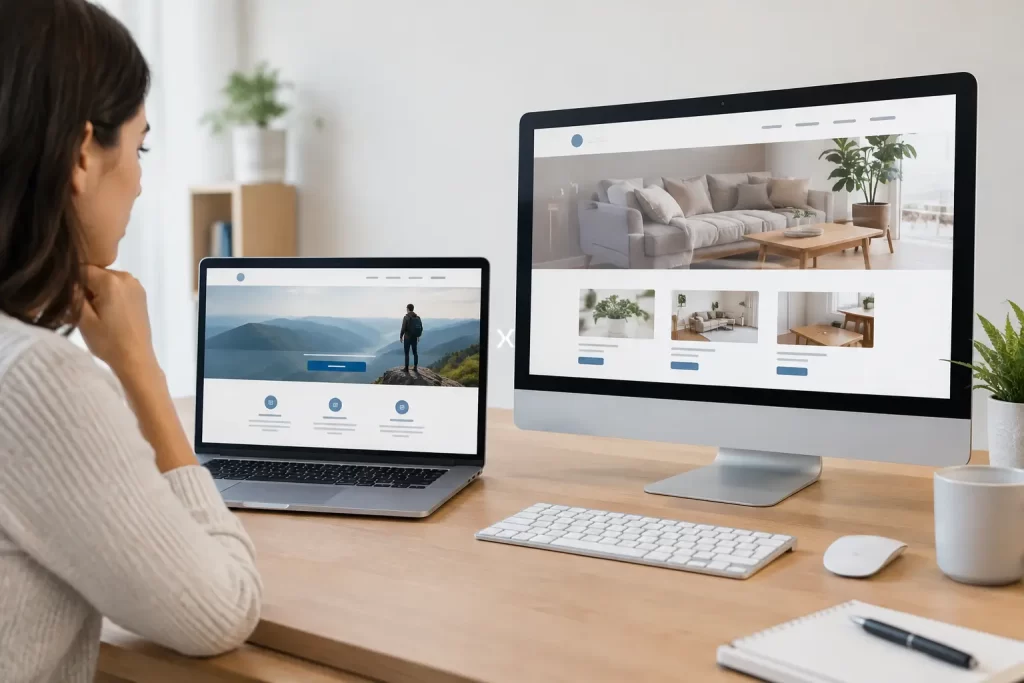
Think of the homepage as your digital front desk. It needs to welcome a broad range of visitors and direct them efficiently. A landing page is closer to a focused sales conversation. It should continue the exact message, need, and expectation that brought the prospect there.
This distinction matters because broad traffic and high-intent campaign traffic behave differently. A person searching your company name often wants reassurance and navigation. A person clicking an ad for “same-day dental implants” or “24-hour AC repair” wants a relevant answer now. Giving both people the same page usually means making one of them work harder than necessary.
What a Homepage Needs to Accomplish
Your homepage carries a major responsibility: it establishes trust quickly while helping different types of visitors find their next step. For a local service business or professional practice, that often means showing who you serve, what you do, where you operate, why customers choose you, and how to get in touch.
A strong homepage should make the business understandable within seconds. Visitors should not have to search for your primary services, location, contact details, or a clear reason to choose you over another provider. It should also support your wider website structure by leading people to service pages, reviews, case studies, team information, financing details, and useful resources.
That breadth is valuable, especially for organic search, referrals, repeat customers, and people researching before they commit. A well-built homepage can strengthen brand recognition and help Google understand the business at a high level. It is also the right destination for general brand campaigns, social profile traffic, and visitors who want to browse.
But breadth creates friction in paid campaigns. The more choices a visitor sees, the more likely they are to click around, get distracted, or leave before contacting you. A homepage might have a menu with ten options, several service categories, multiple calls to action, and informational sections for different audiences. That is appropriate for a homepage. It is rarely ideal when you have paid to attract someone for one specific offer.
What Makes a Landing Page Convert
A landing page starts with message match. If someone searched for teeth whitening, clicked an ad about teeth whitening, and reaches a page that immediately explains your teeth-whitening service, the experience feels consistent. They know they are in the right place.
The page should then answer the practical objections that prevent action. For a dental practice, that could include treatment suitability, expected appointment timing, financing options, patient reviews, before-and-after results where appropriate, and an easy way to schedule. For a contractor, it could cover service area, licensing, availability, pricing approach, warranties, and recent work.
The strongest landing pages stay focused. They lead with a specific promise, explain the service in plain language, provide proof, and make the conversion action easy. That action might be a short form, a click-to-call option, an online booking tool, or a request for a free estimate. The right choice depends on how your customers prefer to buy and how quickly your team can respond.
Shorter is not automatically better. A low-commitment offer may need only a concise page. A high-value treatment, complex B2B service, or major home project often needs more proof before a prospect is ready to submit their details. The goal is not to use the fewest words. The goal is to give a qualified prospect enough confidence to act without burying the action under unnecessary information.
When to Send Traffic to a Landing Page
Landing pages are particularly effective when the traffic source has a defined intent. Google Ads is the clearest example. If you are paying for searches around one service, location, or urgent need, a dedicated page can improve relevance and give you a cleaner picture of campaign performance.
Use a landing page for a focused promotion, a seasonal offer, a new service launch, a location-specific campaign, an event registration, or a lead magnet. They also work well for social advertising, where the ad itself creates a specific promise that the page needs to fulfill.
For example, a general dentistry homepage may appropriately feature preventive care, cosmetic treatments, implants, and emergency appointments. But an ad campaign promoting a new-patient exam should direct visitors to a page about that offer. The page can explain what is included, address eligibility, show practice credibility, and provide a simple booking path. Visitors do not need to sift through every other treatment first.
Dedicated pages also make testing more useful. You can compare two headlines, calls to action, offers, form lengths, or proof elements without redesigning your whole website. Over time, this provides evidence about what your market responds to rather than relying on assumptions.
When a Homepage Is the Better Choice
A homepage makes sense when the message is broad by design. If you are building overall awareness, sponsoring a community event, sharing a general brand announcement, or receiving referral traffic from a partner, visitors may need the wider context your site provides.
It is also the preferred destination for people searching your business name. Branded searchers frequently want to verify details, explore your services, find directions, read about your company, or contact a specific department. A homepage gives them the navigation and reassurance they expect.
Do not create a landing page merely because landing pages are considered a marketing best practice. A weak, generic landing page with no clear offer, little proof, and no tracking will not outperform a strong homepage. The page must match a real campaign strategy and a measurable business goal.
The Mistakes That Cost Leads
The most expensive mistake is sending every campaign to the homepage because it is already there. This is common, but it makes ad performance harder to improve. You lose the ability to tailor the page to the search term, measure a single offer accurately, and remove distractions from the conversion path.
The opposite mistake is building isolated landing pages that do not feel connected to the business behind them. Visitors still need to know who they are dealing with. Brand elements, reviews, credentials, phone numbers, location information, and privacy reassurance all matter. A focused page should not feel anonymous or overly aggressive.
Another frequent problem is measuring only form submissions. A campaign can generate many low-quality leads and still look successful on paper. Track calls, booked appointments, qualified opportunities, sales, and revenue whenever possible. If your staff cannot answer leads promptly, the page alone will not solve the problem. Response time is part of conversion performance.
Finally, do not assume mobile visitors will behave like desktop users. Many local customers search from a phone and want a fast answer, a visible call button, and a form they can complete without frustration. Slow load times, crowded layouts, and difficult forms can waste otherwise valuable traffic.
Build the Right Page Around the Customer Journey
The best choice is guided by the visitor’s intent, not by a rigid rule. Your homepage should establish a credible, easy-to-navigate online presence that supports every part of your marketing. Your landing pages should give paid and promotional traffic a direct route to one meaningful action.
For businesses investing in Google Ads, SEO, social media, and local visibility at the same time, this is where integrated planning pays off. TASProMarketing can align campaign messaging, page design, tracking, and follow-up reporting so your website is not simply collecting visits – it is helping turn marketing spend into accountable opportunities.
Before launching your next campaign, ask one practical question: what did this person expect to find when they clicked? Build the destination around that answer, make the next step obvious, and let the data show you where more profit is being created.