

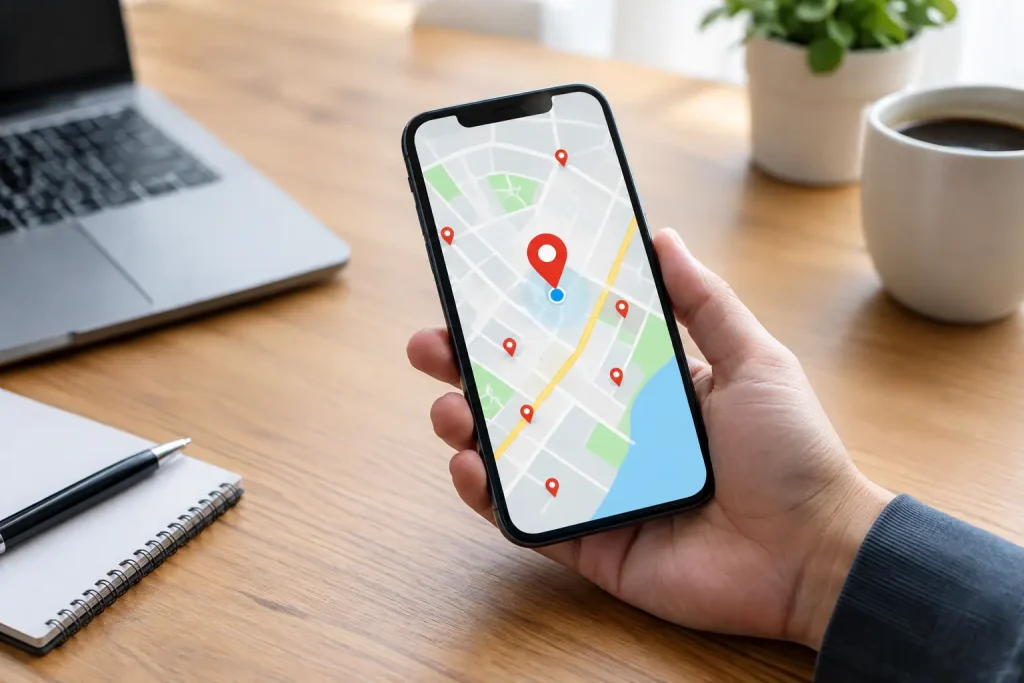
A patient searches for an emergency dentist at 8:15 a.m. A homeowner needs a plumber before water damage gets worse. In both cases, the businesses visible in the local map results receive the call first. Google Maps ranking is not a vanity metric for local companies. It directly affects phone calls, direction requests, website visits, appointments, and revenue.
The challenge is that map visibility is competitive, location-specific, and built on trust signals that take consistent work. A business can have excellent service and still lose leads if its Google Business Profile is incomplete, its reviews are neglected, or its website sends unclear local signals. The right approach is not a shortcut. It is a practical local marketing system that makes it easy for Google and prospective customers to understand why your business is the right nearby choice.
How Google Maps Ranking Actually Works
Google’s local results are primarily influenced by relevance, distance, and prominence. Relevance means how closely your business information matches what a person is searching for. Distance reflects how near the searcher is to your verified location or the area you serve. Prominence is Google’s assessment of how established, trusted, and well-known your company appears online.
Distance is the factor business owners have the least control over. A dental practice in one suburb will not consistently appear for every search across an entire metro area, especially where competitors are closer to the person searching. That does not mean growth is impossible. It means your strategy should focus on dominating the realistic geographic areas where your practice or service team can win.
Relevance and prominence are where disciplined marketing produces results. Your Google Business Profile, website, reviews, local listings, photography, and customer activity should all tell the same accurate story. When those assets are inconsistent, Google has less confidence in your business. When they are aligned, customers have fewer reasons to hesitate.
Build a Google Business Profile That Produces Leads
Your Google Business Profile is often the first interaction a local prospect has with your company. Treating it as a directory listing is a costly mistake. It is a conversion asset that needs the same care as a landing page or paid advertising campaign.
Start with the fundamentals: the correct legal business name, accurate address or service area, current phone number, website, operating hours, and primary business category. Select the most specific primary category available. A cosmetic dentist should not rely only on a broad health-related category, just as a roofing contractor should not describe itself simply as a home service business. Categories help Google connect your business to searches with buying intent.
Add secondary categories only when they reflect services you genuinely provide. Overloading a profile with loosely related categories creates confusion rather than relevance. The same rule applies to services. List major services clearly, using natural customer language. A dental office might include dental implants, emergency dentistry, teeth whitening, and Invisalign treatment where appropriate. A service business might include water heater repair, drain cleaning, or commercial HVAC maintenance.
Your description should explain what you do, who you serve, and what makes the experience better, without cramming in city names or repetitive keywords. Keep it useful. Mentioning extended hours, financing options, family-owned experience, same-day availability, or specialized equipment may matter more to a customer than a slogan.
Photos are not decorative. Real exterior photos help customers recognize your location. Interior, team, product, and completed-work photos help reduce uncertainty before a call. For professional practices, polished photos can reinforce cleanliness, care, and credibility. Keep adding current images rather than uploading a batch once and forgetting the profile for a year.
Earn Reviews Without Taking Shortcuts
Reviews influence both visibility and conversion. A strong review profile tells Google that real customers engage with your business, but the immediate commercial benefit is just as important: people compare ratings, recency, volume, and responses before they contact anyone.
Ask every satisfied customer for a review through a simple, consistent process. The best time is shortly after a successful appointment, completed job, or positive service interaction. Make the request personal and easy, but never offer incentives in exchange for reviews or pressure customers to leave only positive feedback. Purchased, fake, or filtered review campaigns can damage trust and create avoidable compliance problems.
A useful review program has four parts:
- A clear request process for staff after positive customer interactions
- A follow-up message that makes leaving feedback simple on a mobile device
- Prompt, professional responses to new reviews
- A process for identifying recurring complaints and fixing the operational issue behind them
Responding matters, particularly for businesses in health care, home services, legal services, and other high-trust categories. Thank customers without revealing private details. If a negative review is legitimate, acknowledge the concern and offer a path to resolve it offline. A defensive public argument rarely wins a customer back. A calm response can show future prospects that your company takes responsibility.
Strengthen the Website Behind Your Map Listing
A Google Business Profile performs better when it is supported by a credible website. The website does not need hundreds of thin location pages. It needs useful pages that explain your services, demonstrate expertise, work well on mobile devices, and make contacting you effortless.
Create clear service pages for the work that drives revenue. Each page should address common customer questions, expected outcomes, service areas, and a practical next step such as calling, booking, or requesting an estimate. For a multi-location business, each physical office needs accurate, distinct location information and content that reflects the actual team, services, and market.
Local relevance also comes from consistency. Your business name, address, and phone number should match across your website, Google profile, social profiles, and reputable business directories. Small variations can happen, but conflicting details create friction for both customers and search engines. If you relocate, change phone systems, or alter your business name, update every major property quickly.
Do not mistake location keywords for a local strategy. Repeating city names across a page does not make the content useful. A better approach is to include genuine local proof: projects completed in the area, local case studies, community involvement, neighborhood-specific service considerations, and reviews from real customers.
Turn Engagement Into Better Local Performance
Google pays attention to signals that indicate a profile is active and helpful. Keep hours updated, especially around holidays. Publish posts when you have a meaningful offer, event, seasonal service, or announcement. Answer questions accurately. Monitor customer messages and calls so interested prospects do not wait for a response while a competitor answers first.
For service-area businesses, be precise about where your team operates. Do not create virtual offices, use mailbox addresses, or add locations where you do not have a legitimate customer-facing presence. Those tactics can lead to profile suspension, and recovering a suspended profile can interrupt lead flow at the worst possible time.
Operational quality matters here. If your profile generates calls but staff miss them, or if the landing page makes booking difficult, the marketing is not doing its full job. Local visibility should connect to call handling, appointment scheduling, follow-up, and reporting. A high ranking with poor lead management is still wasted opportunity.
Measure Google Maps Ranking by Business Results
Rank tracking can be useful, but a single ranking position is not the full story. Map results vary by the searcher’s location, device, query, and search history. A report that claims you are number one everywhere should be treated carefully.
Track actions that indicate commercial intent: phone calls, website clicks, direction requests, form submissions, booked consultations, and qualified leads. Then connect those leads to outcomes. Which services create the strongest revenue? Which neighborhoods produce profitable customers? Which campaigns improve not only visibility but also close rates?
This is where a managed approach protects your budget. SEO, Google Ads, review generation, website improvements, and local profile management should not operate as separate vendors making separate promises. They should work together around a clear customer-acquisition goal. TASProMarketing helps businesses bring those moving parts into one accountable system, with reporting that focuses on what local visibility is producing rather than what looks impressive on a dashboard.
Avoid the Habits That Hold Businesses Back
The most common Google Maps ranking problems are not technical mysteries. They are neglected basics: duplicate listings, outdated hours, wrong categories, inconsistent contact details, few recent reviews, weak photos, and websites that do not clearly explain services or locations.
Avoid keyword-stuffing your business name, creating fake locations, or paying for suspicious review packages. These shortcuts may look tempting when competitors appear above you, but they put a valuable business asset at risk. White-hat local marketing takes more discipline, yet it builds visibility that can survive platform updates and customer scrutiny.
Start by auditing what a customer sees when they search for your business and your core services in your local area. If the answer is incomplete, outdated, or less convincing than nearby competitors, that is not a reason to panic. It is a clear revenue opportunity waiting to be addressed.